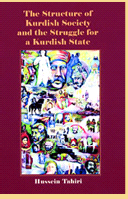
Hussein Tahiri
The Structure of Kurdish Society and
the Struggle for a Kurdish State
Description
Despite over 150 years of armed struggle, why have the Kurds been unsuccessful in forming their own nation-state? This book argues that Kurdish society has traditionally been divided along tribal lines. Tribal loyalty has transcended loyalty to the Kurdish nation. After World War II, Kurdish political parties were formed, however, Kurdish intellectuals did not have the power to mobilize Kurdish masses. Kurdish political movements were forced to incorporate Kurdish tribal leaders, and with them tribal structure and values were integrated into politics. The Kurdish political parties that replaced Kurdish tribes in leading Kurdish revolts after World War II engaged in fratricidal fighting against each other – as their tribal ancestors had done – thereby weakening themselves in the process. The leaders of Kurdish political parties have followed the path of their tribal ancestors, thus preventing the development of Kurdish nationalism.
Examining the major Kurdish revolts, this book analyses the internal factors that led to their defeat, as well as arguing that reliance by Kurdish leaderships on foreign powers has had disastrous consequences at crucial points in Kurdish history.
This book looks at political developments in Iranian, Iraqi and Turkey’s Kurdistan, showing how many opportunities for Kurdish statehood were squandered due to Kurdish political weakness. It analyses the relations between the major Kurdish political parties in different parts of Kurdistan and compares their treatment of each other with that of Kurdish tribes. It discusses the impact of the United States invasion of Iraq upon Kurdish mass nationalism and inability of the KDP and PUK to form a transparent system that promotes democratic principles above tribal values.
This comprehensive analysis differs markedly from conventional literature on the Kurds. It traces the development of Kurdish politics through a systematic work on the issue of tribalism in Kurdish history. The book is original and of high scholarly value. The author has conducted a series of highly significant interviews with key political figures, which are extremely important in understanding the evolution of the Kurdish problem during the last few decades. This in-depth analysis testifies to the author’s capacity in conducting complex political and sociological investigations.
For further information please visit http://www.mazdapub.com
Dr. Hussein Tahiri settled in Australia as a refugee in 1989, and completed his Ph.D. in Political Science at The University of Melbourne, Australia, in 2001. Dr. Tahiri has worked as a Lecturer teaching Middle East politics. He is a commentator on Kurdish and Middle Eastern affairs in Australian and International media. He is currently an Honourary Research Associate with the School of Political and Social Inquiry, Monash University, Australia.