Kurdistan Center
for Democracy in the Middle East


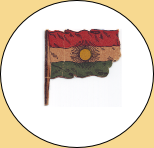
Khoyboun Flag

















About us

www.kcdme.com
Declaration of the formation of Movement for Democratic Change
The Patriotic Union of Kurdistan (PUK) was born as a response to the defeat that was inflicted on the Kurdish people by the then leadership of the Kurdish liberation movement in March 1975. During the ensuing years of struggle, the Kurdish population rallied behind PUK’s patriotic and social messages en masse. Many men and women, civilian and ‘freedom fighters’ sacrificed their lives’ and that of their families to achieve the PUK’s objectives. The entire Kurdish nation pinned their hopes for a brighter future on their march. However, since the uprising of spring 1991, when the PUK and other Kurdish parties assumed the government of the region, they gradually betrayed these objectives much to the disappointment of the Kurdish people who continued to suffer enormous hardships under the auspices of Kurdistan Regional Government (KRG). Nevertheless, in full realization of the serious challenges that threatened the very existence of the KRG and their fledgling trial in democracy, the people of Kurdistan, their intelligentsia, the party’s rank and files, the activist and their supporters overlooked the shortcomings that blighted the leadership’s strategies. Indeed they actively participated in building the political institutions with vigour and zeal. But the Kurdish leadership exploited the ‘silence’ of the people and have over the course of time voided these institutions from their democratic essence and imposed an unchecked control over every aspects of life.
The Democratic institutions in Iraqi Kurdistan are facing serious challenges that threaten its future. However, if the challenges in the past were originated from outside Kurdistan, the current challenges are all generated within. Today, the main Kurdish political parties have effectively aborted the democratic experiment in Kurdistan and buried all the potential that it harboured, which could have turned it into a successful experiment in democracy in the Middle East that we all would have been proud of. Instead of strengthening the democratic principles upon which the institutions should have operated, they systematically interfere with the executive, the legislative and the judicial bodies that were installed to build on a democratic future. Their direct interference in what should be democratic elections, from local to national, from trade unions to all kind of other public syndicates, have fiddled the will of our people. The Kurdistan Parliament, the Government Cabinet, the Financial Audit Authorities and other professional bodies are now not far from being powerless, impotent institution serving as a façade hiding a near ‘totalitarian’ regime. The ongoing violations of human rights, the systematic suppression of the descending voices and deliberate resurrection of tribal values and personality-cult systems have been detrimental to the standing of our freedom-loving and forward looking nation.
The main Kurdish political parties have not been successful in dealing with the other constituencies of Iraq, the neighbouring countries, the USA and Europe and other actors on the international stage, to forge the kind of alliances that safeguard the interest of the Kurdish People. Nor have they been able to build and maintain healthy relations to other political parties in the Kurdish region.
The main Kurdish political parties have not been successful in dealing with the other constituencies of Iraq, the neighbouring countries, the USA and Europe and other actors on the international stage, to forge the kind of alliances that safeguard the interest of the Kurdish People. Nor have they been able to build and maintain healthy relations to other political parties in the Kurdish region.
Furthermore, the interference of the political parties in market mechanisms, in commercial activities and trade contracts, have undermined every chance of a stable economic environment in which the Kurdish region could prosper in it’s totality. The Kurdish leadership has miserably failed to provide the most basic needs of the population, such as running clean water and electricity supplies. They have failed in their attempts to restore the Kurdish areas outside the sphere of KRG to the region. They have not even attempted to rebuild the rural areas which are vital for the revival of local economy and the reduction of dependency of the region on the volatile supply lines. Hence they transformed the productive society in Kurdistan into a society of consumers who depend for their daily food supplies on the unreliable supply routes from the neighbouring countries on the one hand. And on the other, they are totally dependant on the cash supply from Baghdad for their meagre wages. This situation has increased the vulnerability of the region vis-à-vis food security, and compromises their independence in the decision making process.
The social, political and economic climate that has evolved under the rule of the current Kurdish leadership is a climate of unethical politics, murky economic activities, lawlessness and corruption in which a small filthily-rich powerful elite lives in total contrast to the vast majority of the people living in poverty, exclusion and destitute. There is an increasing sense that the Kurdish society is being deprived from their sense of civic duty and from moral standards which have formed the very essence of people’s patriotism. But above all, it is being stripped from a sense of dignity. These fallacious policies of the Kurdish leadership have pushed the population to despair and the brinks of explosion.
As result of these failures, the achievements of the Kurdish people are exposed to serious dangers and cast a shadow over the future of Kurdistan. The PUK’s own future is uncertain and if the current trends remain unchallenged it will lead to the disintegration of the party. Such a calamity would leave a huge vacuum that would reverberate in all aspects of life in Kurdistan and would further destabilise the region. It would leave the room for the more radical and reactionary forces to fill the gap, especially Islamic fundamentalism and in particular the elements of Ansar Ul Islam, the Al-Qaida extension in operating in Iraqi Kurdistan. This would put back the democratic experiment and its institutions in Kurdistan for many decades.
The faithful rank and files within the Kurdish parties, often joined by the technocrats, the intelligentsia and the ordinary people, continuously attempted to attract the attention of the leadership to these festering problems and made several serious attempts to make the leadership review their policies and put in place much needed policies and programs to tackle the accumulating problems. But the Kurdish leadership continued to ignore these genuine efforts. Once PUK was the organisation that served as a platform for people to express opinions, concerns and for the democratic voices of the Kurdish people. These visions would be embraced and embedded in PUK’s policies and plans. But the leadership has seriously disappointed the people and dashed their hopes by excluding them from the political process.
It is worth pointing out here that according to any measures of civil probity, let alone the standards of the international Social Democratic movement, the PUK should have established and safeguarded a system of check and balance that would create the mechanism through which to hold the leadership to account for their actions, failed strategies and policies. Instead, they have imposed a climate of fear and intimidation to suppress the descending voices. They excluded these voices from the political process, or forced them to yield to their control in fear of vicious persecution. They have deliberately stifled the debate within the party organisations, especially if it is to question their actions and strategies.
It is with all this in mind that we declare the formation of the Movement for Democratic Change as a platform within the Patriotic Union of Kurdistan, as the voice of the so many of PUK rank and files as well as the Kurdish people at large. We argue for radical changes in the philosophy, the policies and the structure of PUK through democratic means in the direction that serves the interest of the people in Kurdistan. We stride towards the installation of social justices, the establishment of democracy and the prevalence of the rule of law in a civil society.
We would like to stress here that we are not trying to establish a political party or an organization. We are the voice of a vast number of individual members of PUK who want to discuss these vital issues and invite like-minded members to join our debate within a party that we still believe is capable of delivering its promised objectives. We come from different backgrounds within the party and may even hold different ideological convictions; we share an acute sense of responsibility towards our fallen comrades and a deeply felt aspiration for change towards a brighter future of the people of Kurdistan.
While we stride toward bringing about the vital radical changes within PUK, we will simultaneously endeavour to join our efforts with every political group, organisation and individuals who share our Change Agenda, regardless of ideological differences, to forge a united opposition front that would effectively change the political and administrative systems in Iraqi Kurdistan through democratic means to spare our nation the calamity of the dangers that lie ahead.
On behalf of
Movement for Democratic Change (MDC)
Movement for Democratic Change (MDC)